

What is "Membrane keg"?
Membrane keg (eg. KeyKeg©)
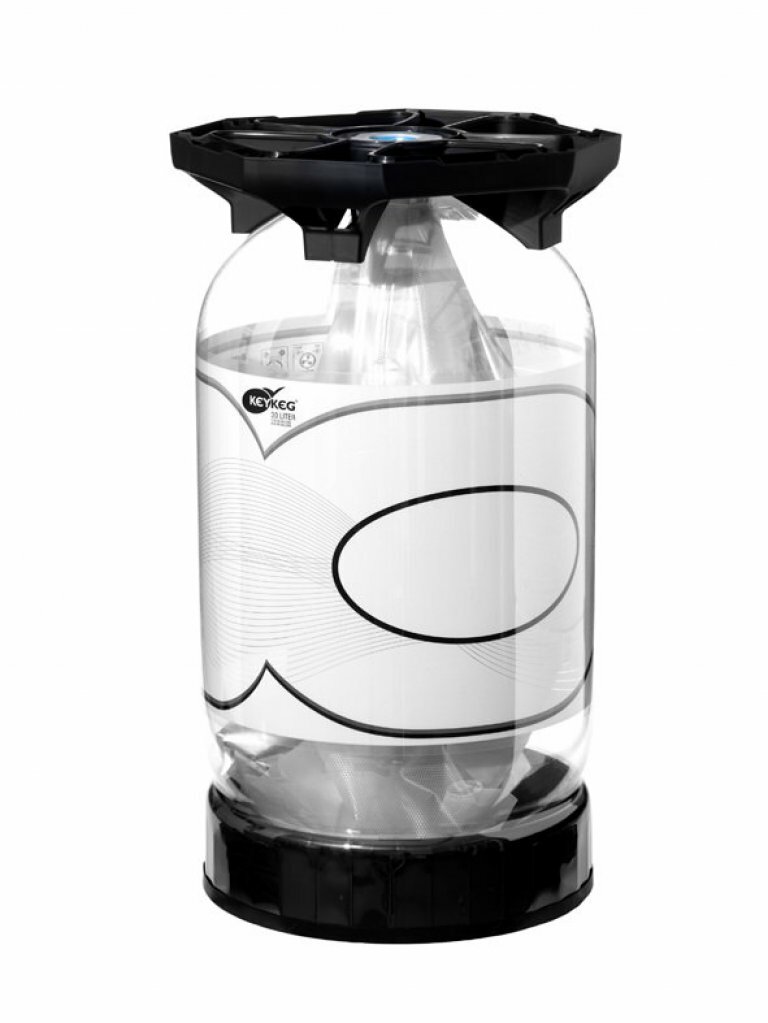 Many small and independent brewers supply interesting beers in membrane kegs as well as casks. Membrane keg (often referred to as “keykeg”, although KeyKeg is actually a brand) has long been used by breweries in continental Europe to supply bars serving a larger number of beers. It is also frequently used in the UK by "craft" brewers, and is a form of keg that can be used to deliver Real Ale with interesting characteristics.
Basically, membrane keg is a plastic bottle containing a bag with beer inside. Unlike a conventional keg, the gas pumped in - to force the beer out and into your glass - doesn’t touch the liquid. It flows around the outside of the bag, pushing the beer out of the keg without it becoming too fizzy.
As the bag itself isn’t open to the air, the beer has all the natural, live-yeast carbonation of real ale, but without the risk of gradually going flat. It cuts down on the possibility of off-flavours developing from oxidation, too. Of course, the flavour of a cask ale can develop over time with some air space, so there’s a potential loss as well as a gain.
Different methods of dispense suit different styles of beer. For example, most bitters, and many porters and stouts, taste better from a cask, where they can condition lightly, changing slightly over time, and the initial exposure to the air when the cask is tapped and vented can dissipate any of the strange flavours and aromas that can occur with cask conditioning. However, highly-hopped IPAs, saisons, and really dry stouts, are often better with a higher carbonation. Brewers may also want to avoid losing any hop aroma to the air before the beer reaches the customer’s glass. Some of these styles are better colder, too. This is where membrane keg comes into its own.
CAMRA’s definition of Real Ale allows for the inclusion of real ales dispensed from a membrane keg.